
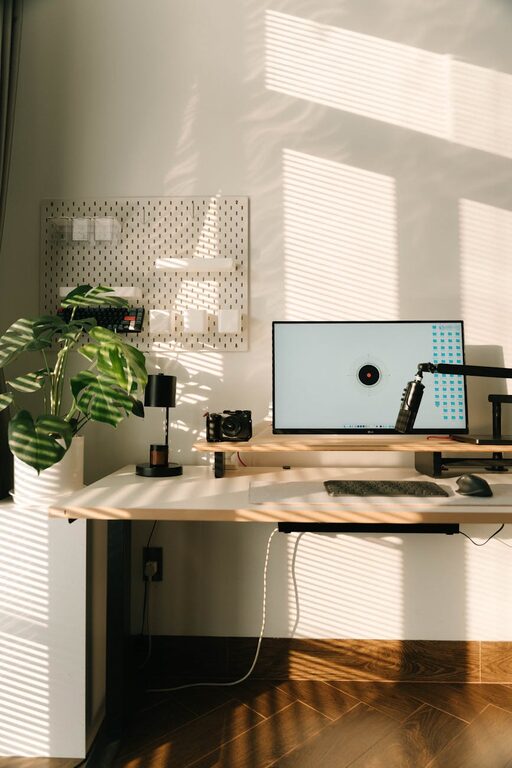
Creating a home workspace that promotes both peace and productivity is essential for anyone who works from home or spends a lot of time on personal projects. A thoughtfully arranged area can help reduce distractions, improve focus, and make working from home more enjoyable. Here are some simple steps to establish a workspace that supports your well-being and work goals.
Choose the Right Location
Find a Quiet Spot
First, select a place in your home that is relatively quiet and separated from the main activity zones. This could be a spare room, a corner of your living room, or even a nook in your bedroom. The key is to choose a spot where you can work with minimal interruptions.
Consider Natural Light
Natural light has a positive impact on mood and energy levels. Position your desk near a window if possible. If natural light is limited, ensure you have good-quality artificial lighting that reduces eye strain.
Declutter and Organise Your Space
Keep Only What You Need
A cluttered workspace can be distracting and stressful. Remove unnecessary items, keeping your desk clear except for essentials such as your computer, notepad, and a few pens.
Use Storage Solutions
Invest in storage options like shelves, drawers, or organisers to keep documents and supplies tidy. Label boxes or files to make it easy to find things quickly.
Cable Management
Messy cables create visual clutter. Use clips, ties, or cable organisers to keep cords neat and out of the way.
Choose Comfortable and Functional Furniture
Ergonomic Chair and Desk
Comfort matters, especially if you spend long hours at your desk. An adjustable chair with good back support helps prevent discomfort. Your desk should be at a height that allows your arms to rest comfortably when typing.
Personalise with Care
Adding a few personal items, such as a plant or a photo, can make the workspace inviting. Keep it simple to avoid distractions.
Minimise Noise and Distractions
Use Headphones or White Noise
If your home is noisy, noise-cancelling headphones or playing soft background sounds like white noise or gentle music can help improve concentration.
Set Boundaries
Clearly communicate your work hours to family or housemates to minimise unexpected interruptions.
Implement a Routine and Organise Your Day
Regular Work Hours
Maintain consistent start and finish times to help your mind associate your workspace with work mode.
Planning Tools
Use planners, calendars, or digital apps to organise tasks and deadlines. Keeping a to-do list visible on your desk can help you stay focused.
Add Elements that Promote Calm and Focus
Plants and Greenery
Adding a few small plants can improve air quality and create a calming atmosphere.
Colours and Decor
Choose soothing colours for your workspace, such as soft blues, greens, or neutrals. Avoid overly bright or distracting patterns.
Keep the Air Fresh
Open a window regularly or use air purifiers to maintain fresh, clean air, which could aid concentration.
Take Regular Breaks
Follow the Pomodoro Technique
Work in focused intervals (e.g., 25 minutes) followed by short breaks. This helps maintain energy and prevents burnout.
Stretch and Move
Standing up, stretching, or walking briefly during breaks helps relieve physical tension and refreshes the mind.
—
Creating a peaceful and productive home workspace doesn’t require expensive upgrades or complicated setups. By paying attention to your environment and habits, you can craft a space that supports your work and well-being. Start with these simple steps today for a more enjoyable and effective work-from-home experience.
